How AI Search Is Changing SEO in 2026 (And Why Your Old Tricks Won’t Save You)
Remember when SEO was simple? You’d stuff a bunch of keywords into a blog post, build a few sketchy backlinks, and boom — you were on page one of Google, living your best digital life. Those days are gone, my friend. Dead. Buried. And AI search just showed up to the funeral wearing Google’s clothes.
Welcome to 2026, where SEO has undergone a transformation so dramatic, even the experts are doing double-takes. If you’re still playing by the old rulebook, congratulations — you’re optimizing for a search engine that no longer fully exists.
Let’s talk about what’s really happening, why it matters, and what you should actually be doing about it.
Table of Contents
ToggleThe 10 Blue Links Had a Baby with a Robot
For decades, search worked like a library catalogue. You typed in a query, Google handed you a list of links, and you clicked through like a digital Indiana Jones looking for treasure. Those ten blue links were sacred. They were traffic. They were life.
Then AI Overviews showed up and said, “Hold my datasets
Today, Google’s AI Overviews, ChatGPT Search, and Perplexity don’t just show you where to find the answer — they give you the answer. Right there. On the page. No clicking required. It’s convenient for users and absolutely terrifying for website owners who built their entire business model on people clicking things.
The numbers back this up. AI Overviews are now reducing organic click-through rates on top search results by an average of 34.5%. Think about that. You could be ranking number one for your dream keyword and still be getting a third less traffic than you used to. Your SEO is doing great. Your traffic is having an existential crisis
SEO Isn't Dead — It Just Got a Lot More Complicated
Before you throw your laptop out the window, here’s some genuinely good news: SEO is not dead. Not even close. In fact, organic search traffic has only dipped slightly — about 2.5% between early 2024 and late 2025. The doom-and-gloom crowd predicted 25% to 50% drops. They were wrong. SEO is alive; it just changed careers.
The new version of SEO isn’t just about ranking on Google anymore. It’s about showing up in AI-generated answers, being cited by large language models, and building enough brand authority that when ChatGPT summarizes your industry, it mentions you — not your competitor.
This is the fundamental shift. Old SEO asked, “How do I rank on page one?” New SEO asks, “How do I become the answer?
The Rise of Zero-Click Searches (And How to Not Cry About It)
Here’s a stat that’ll make you spill your coffee: 75% of AI Mode sessions end without any external website visits. Users are getting their answers without ever leaving the AI interface. They asked a question. The AI answered it. Case closed. Your website wasn’t invited.
This is what the industry calls the “zero-click” phenomenon, and it’s reshaping how savvy SEO professionals think about content strategy. Instead of optimizing purely for clicks and traffic volume, the smartest teams in 2026 are now measuring AI citation frequency — how often their content gets referenced inside AI-generated answers.
Think of it like being quoted in a newspaper versus just having a newspaper. Being cited by an AI is the new backlink. Except it’s invisible. And it drives decisions before anyone even clicks. Fun, right?
What AI Actually Wants from Your Content
Here’s where things get genuinely interesting. Traditional SEO loved keywords. The more times you said “best running shoes,” the more Google noticed you. AI search is smarter than that — annoyingly so.
Generative AI engines don’t just match keywords. They interpret intent and context. They want comprehensive, semantically rich content that actually answers what the user is asking — not content that pretends to answer it while secretly selling you something.
For your SEO strategy in 2026, this means:
Depth over density. AI systems prefer content with substance. Long-form articles that explore a topic thoroughly are more likely to be extracted and cited than thin, keyword-padded posts. The era of 300-word blog posts doing anything useful is well and truly over.

Structure matters more than ever. FAQ-style content is surging in popularity because AI search loves it. When you ask a question in a neat, structured format and then answer it clearly, you’re essentially handing the AI exactly what it needs to quote you. Use FAQ schema markup and watch your AI visibility improve.
Authority is the new currency. Brands are 6.5 times more likely to be cited through third-party sources than their own domains. That means digital PR, expert mentions, guest articles, and getting people to talk about you online isn’t just nice to have — it’s central to your SEO strategy.
E-E-A-T: The Framework That Refuses to Retire
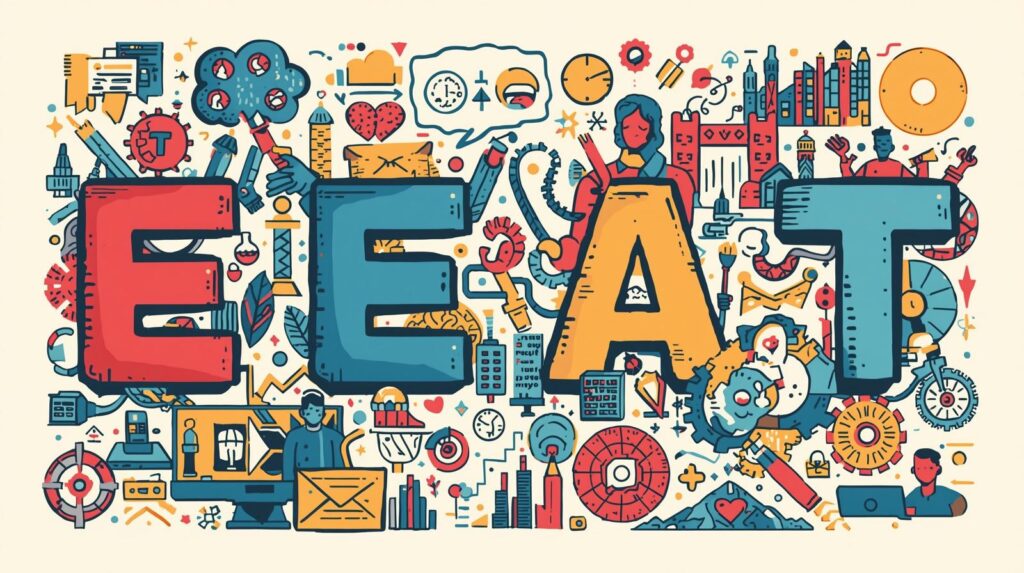
Google’s E-E-A-T framework — Experience, Expertise, Authoritativeness, and Trustworthiness — has been around since 2014. In 2026, it’s more important than ever. AI systems are trained to recognize genuine expertise. They’ve essentially read the entire internet and can tell the difference between content written by someone who actually knows what they’re talking about and content written by someone who Googled the topic for twenty minutes and hoped for the best.
If your SEO content doesn’t demonstrate real expertise, real experience, and real trustworthiness signals, AI won’t cite you. It’ll cite someone who does. This is genuinely good for the internet, even if it’s temporarily inconvenient for people who’ve been cutting corners.
Brand Building Is Now an SEO Strategy
Here’s a plot twist nobody saw coming five years ago: one of the most powerful SEO tactics in 2026 is simply becoming a well-known brand.
Research shows that websites with strong brand signals — consistent presence across platforms, branded search volume, mentions on Reddit, LinkedIn, and industry forums — are significantly more resilient to Google algorithm updates. When an AI is deciding whose content to trust and cite, brand recognition is a major signal.
This means your SEO team and your brand marketing team need to be having lunch together regularly. Your content strategy needs to be on platforms where AI systems actually gather their knowledge — Reddit discussions, LinkedIn articles, industry forums. If LLMs are learning from the internet, you want to be in the internet’s conversations, not just on your own website.
The New Metrics That Actually Matter
If you’re still measuring SEO success purely by keyword rankings and organic traffic, you’re using a map of a city that’s been redesigned. You’ll get somewhere, but not necessarily where you want to go.
The metrics that forward-thinking SEO teams are tracking in 2026 include:
- AI citation frequency — how often your brand or content appears in AI-generated answers
- Brand entity strength — how well AI systems understand who you are and what you stand for
- Generative AI referral traffic — visits that originate from ChatGPT, Perplexity, and similar platforms
- Content authority signals — external mentions, citations, and links from trusted sources
- Conversion quality — because even with lower traffic, are the people who do click actually converting?
The goal of SEO in 2026 isn’t to get more random clicks. It’s to attract the right people who are already primed to trust you because an AI just told them you’re an expert.
What You Should Actually Do Right Now
Enough analysis. Here’s the practical stuff:
- Write genuinely useful, in-depth content. Stop padding. Start teaching. AI rewards content that earns citations, and citations go to content that’s actually helpful.
- Structure your content with FAQ sections and schema markup. Make it easy for AI to extract and use your answers.
- Build your off-site presence. Get quoted in industry articles. Build relationships with journalists and bloggers. Encourage customer reviews. Maintain active, valuable social media presence.
- Monitor where your brand appears in AI responses. New tools exist specifically to track AI citations and brand mentions across LLM platforms. Use them.
- Stop treating SEO as a separate department. In 2026, SEO intersects with content, PR, UX, brand, and even product. It’s a holistic strategy, not a checklist.
The Bottom Line
AI search hasn’t killed SEO. It’s made it harder — and honestly, more interesting. The gap between mediocre content and genuinely excellent content has never been wider in terms of visibility and impact. The brands that will dominate search in the next decade aren’t the ones gaming algorithms. They’re the ones being cited, trusted, and recommended by AI systems because their content actually deserves it.
So yes, SEO is changing. Dramatically. But the core truth underneath all the AI noise is the same as it’s always been: create content that genuinely helps people, build real authority in your niche, and the search visibility — whether from Google, ChatGPT, or whatever comes next — will follow.
The robots aren’t coming for your SEO. They’re just raising the bar.
Time to clear it.